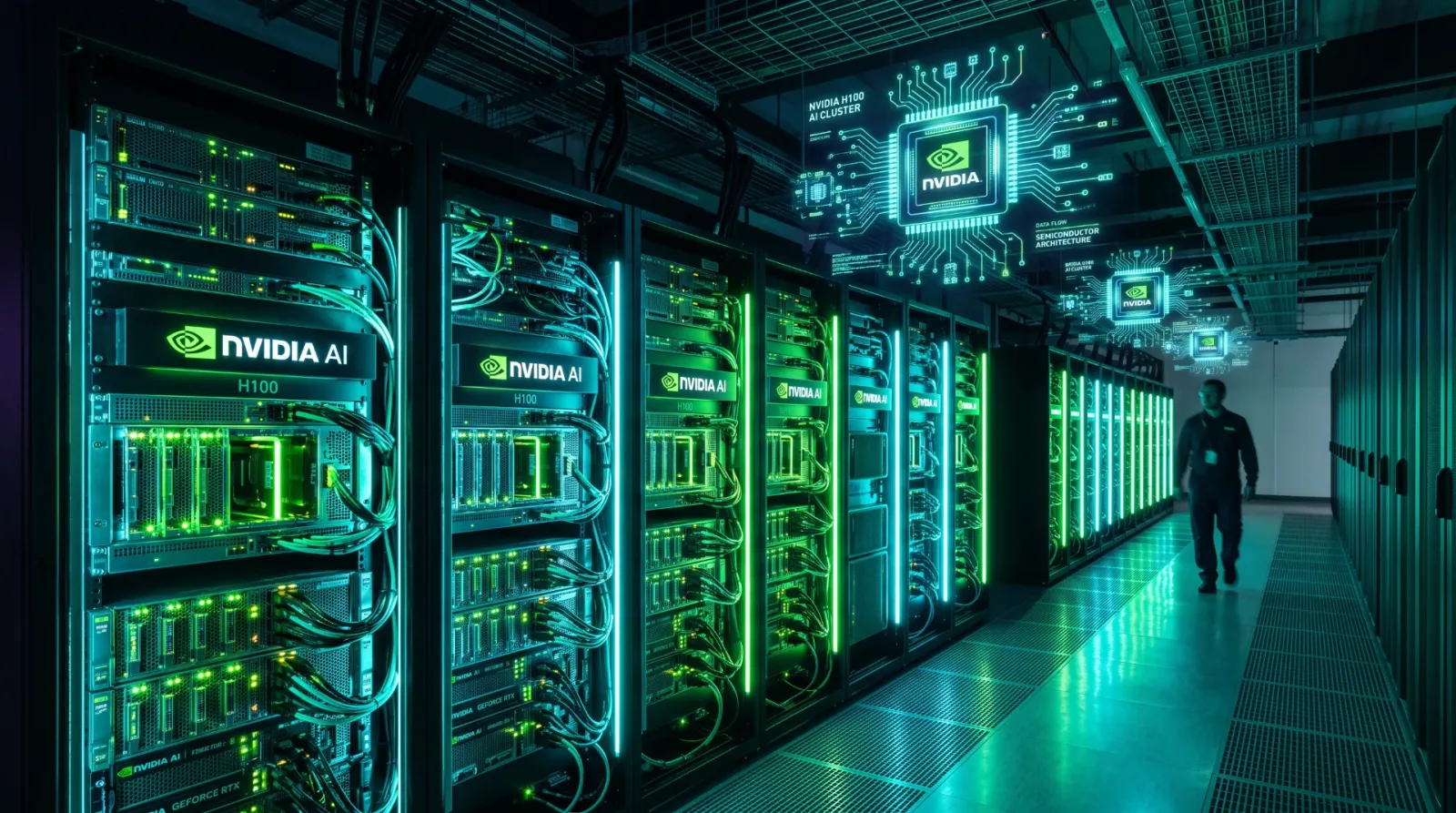
Chinese tech giants ByteDance, the parent company of TikTok, and Tencent have begun receiving their first batches of Nvidia H200 AI graphics processors, with each company adding nearly 10,000 units over the past few weeks. This marks the first tangible flow of this hardware into mainland China after months of bureaucratic and geopolitical friction, although the rollout still faces significant government restraints and infrastructure constraints.
A Regulatory Minefield
Even though the U.S. government authorized exports of these processors to select customers in China — subject to a 25% payment to the U.S. Treasury — and licensed companies such as Alibaba, JD.com, Tencent, and ByteDance, shipments remained effectively frozen by the Chinese government itself.
China's National Development and Reform Commission (NDRC) requires individual review and approval for each purchase. That bottleneck caused Nvidia's market share in China to tumble; CEO Jensen Huang has reported levels near zero, compared with the 95% dominance the company once held.
Hardware partners such as Lenovo have begun reviving orders for H200-equipped servers for the Chinese market. But every acquisition remains subject to strict sign-off from regulators in Beijing.
Beijing's Condition: Hong Kong Detour and the Energy Puzzle
The roughly 20,000 units delivered so far represent only 2.5% of the more than 400,000 H200 units Chinese tech firms are approved to acquire. The central condition imposed by Beijing, however, is that the vast majority of these chips must remain outside mainland China and instead be deployed in Hong Kong.
That directive creates a critical logistics and power bottleneck:
- Massive power consumption: Each H200 GPU consumes up to 700 W; a standard server with eight cards (HGX H200) needs around 10 kW. Deploying a single company's approved quota of roughly 100,000 units would require about 125 MW of electricity.
- Limited capacity in Hong Kong: The entire existing data center infrastructure in Hong Kong is nowhere near enough to support such a load. Most facilities are already running at high utilization, and expanding the grid or building new power-hungry data centers takes years, not months. This makes the mandated Hong Kong detour a major bottleneck for deploying these advanced AI chips.
As a result, even though the H200s are physically arriving, their practical deployment is far from imminent. The combination of political scrutiny, energy scarcity, and infrastructure limits means Chinese companies may have the hardware but still lack the means to run it effectively. Until these issues are resolved, the region's AI ambitions will remain constrained by more than just export controls.